
ÊÖ»ú¿´Æ¬¸ßÇ帣Àû to honour Truth and Reconciliation Commission’s calls to action

In order to honour the indigenous history of Quebec and Canada, in June, the ÊÖ»ú¿´Æ¬¸ßÇ帣Àû’s Council of Commissioners adopted multiple resolutions aimed at further increasing awareness and understanding of the history, realities, and perspectives of Indigenous people in the classroom.
“It is an important step, one which has been long overdue,” said ÊÖ»ú¿´Æ¬¸ßÇ帣Àû Chairman Joe Ortona. “This moment of reflection serves as a reminder that there were Indigenous people on our territory before the European settlers arrived. This land was never ceded away.”
The Council of Commissioners vowed to provide age-appropriate resources for students as well as professional development opportunities for staff. Currently, the ÊÖ»ú¿´Æ¬¸ßÇ帣Àû is working to bring together stakeholders, university faculty, as well as members and leaders of local Indigenous communities as a means of achieving deeper learning.
Furthermore, the ÊÖ»ú¿´Æ¬¸ßÇ帣Àû has committed to create and adopt an Indigenous Land Acknowledgement that encourages reflection and accountability, as well as to honour the Truth and Reconciliation Commission’s Calls to Action. The 94 Calls to Action, as outlined in a June 2015 report, seek to “redress the legacy of residential schools and advance the process of Canadian reconciliation.”
“While there is a lot that remains to be done, I am glad that the ÊÖ»ú¿´Æ¬¸ßÇ帣Àû is doing its part,” added Ortona. “We will continue to do so as a board, as individuals, and as members of society.”
About the ÊÖ»ú¿´Æ¬¸ßÇ帣Àû
With a youth and adult sector population of more than 35,000 students, the ÊÖ»ú¿´Æ¬¸ßÇ帣Àû (ÊÖ»ú¿´Æ¬¸ßÇ帣Àû) is the largest English public school board in Quebec. Established on July 1, 1998, when the province created new boards along linguistic lines, the ÊÖ»ú¿´Æ¬¸ßÇ帣Àû network consists of 77 schools and centres. For more details, visit the ÊÖ»ú¿´Æ¬¸ßÇ帣Àû website at www.emsb.qc.ca.

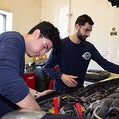




We offer training on job-related skills, upgrading of certifications, customized training packages in vocational training, and much more.

AEVS Affordable Luxury
Did you know two of our vocational centres offer premium services at a discount?